
Moving Earth to Prepare Your Site
Excavation in Howell for foundation prep, drainage correction, and property development
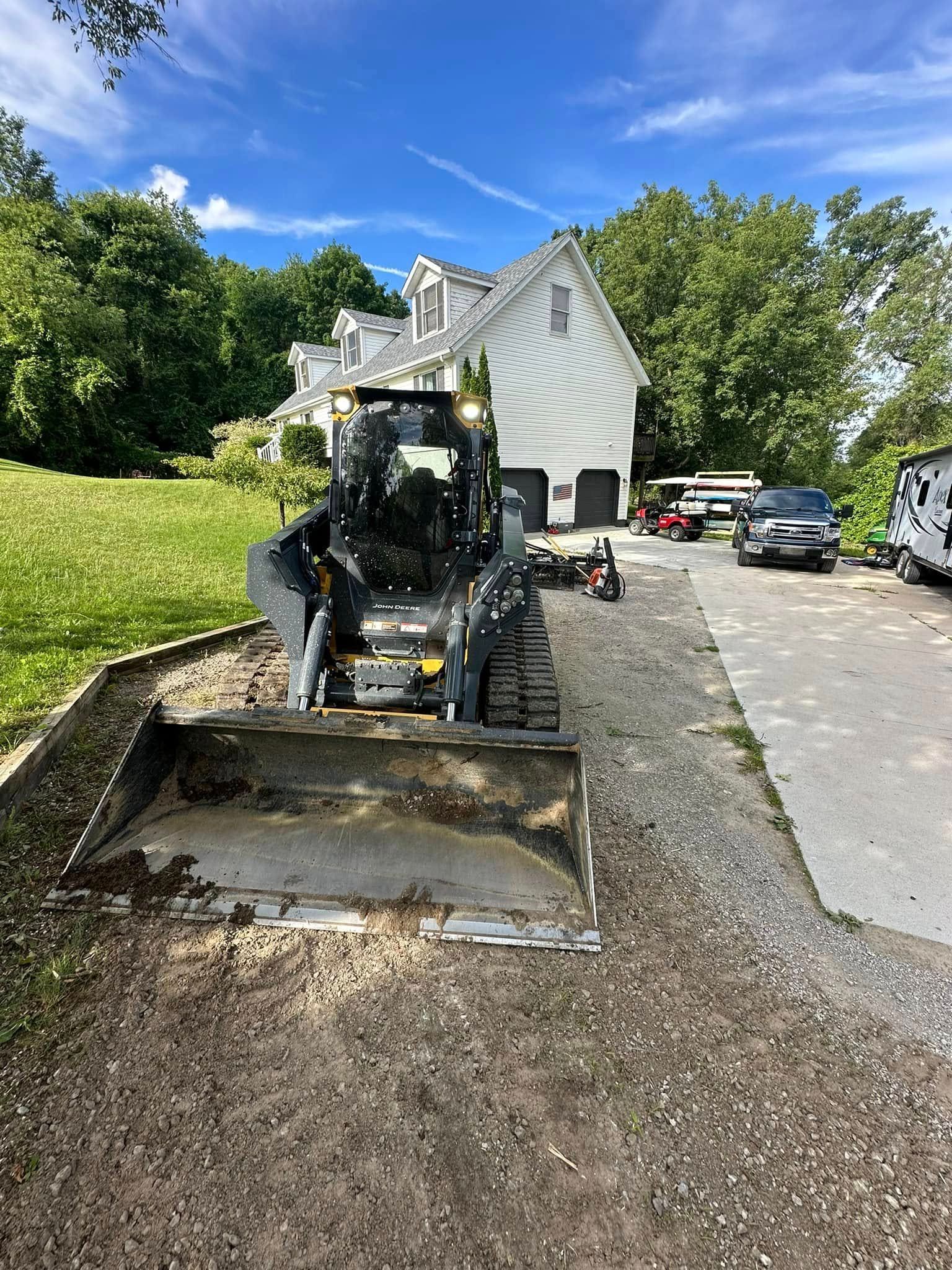
DGD Outdoor Services, LLC provides excavation services for property owners and contractors in Howell and surrounding areas who need soil moved, graded, or removed to prepare a site for construction, drainage improvement, or land development. You may be planning a pole barn foundation, installing a new septic field, or correcting water flow issues that have caused pooling near your basement. The service begins with site layout, followed by controlled digging using excavators and skid steers to reach the required depth and dimensions.
The crew operates modern equipment suited to the varied terrain found across Livingston County, from sandy soils to heavier clay deposits. Excavation depth and slope are set according to project specifications, whether that means a level pad for a garage slab, a trench for drainage tile, or a bowl-shaped detention area. Spoil piles are staged onsite or hauled away depending on your plan for the material.
If you are starting a build, solving a drainage problem, or opening access to a landlocked portion of your property, contact the team to review site conditions and confirm equipment needs.
What Gets Done and What You Will Notice
You will see soil removed to expose subgrade, with clean edges along footings, trenches, or basins. Slopes are cut to match drainage plans, and any roots, rocks, or debris encountered during digging are separated and disposed of or stockpiled as requested. DGD Outdoor Services, LLC coordinates the sequence so that excavation does not interfere with other site work or utilities already in place.
Once excavation is complete, you are left with a site ready for the next phase, whether that is pouring concrete, laying pipe, or beginning grading and compaction. Water will drain toward designed outlets instead of pooling randomly, and the ground surface will reflect the elevations shown on your site plan. If grading or backfill is part of the larger project, those steps follow once structural work is in place.
Excavation does not include utility locating, permit acquisition, or engineered soil testing. Those tasks should be completed before digging begins. The work also does not include hauling material off site unless explicitly included in the scope.
Answers to Excavation Planning Questions
Customers often want to know about timing, access requirements, and what happens if conditions underground differ from expectations.
What needs to happen before excavation starts?
Utilities must be located and marked, permits obtained if required, and site access confirmed for equipment. A site plan or sketch showing depths and dimensions helps ensure accuracy.
How deep can excavation go on a residential lot?
Depth depends on project type and soil stability, but most residential work ranges from two to eight feet. Deeper excavation may require shoring or sloped walls to meet safety standards.
What equipment is typically used for excavation in Howell?
Standard projects use a mid-size excavator with a digging depth of 12 to 14 feet and a skid steer for material movement. Larger projects may require a dozer or articulated dump truck for hauling.
When is the ground too wet to excavate?
Excavation in saturated soil creates rutting, poor compaction, and difficulty achieving grade. Work is typically postponed after heavy rain until the site drains and firms up, usually within a few days depending on soil type.
Why does excavation sometimes uncover rocks or old fill material?
Soil conditions vary across properties, and buried debris, fieldstone, or previous fill is common in rural and older developed areas. These materials are separated during digging and handled according to your preference.
Whether you are breaking ground on a new structure or addressing long-term drainage problems, DGD Outdoor Services, LLC can assess your site and outline what excavation will involve from start to finish.