
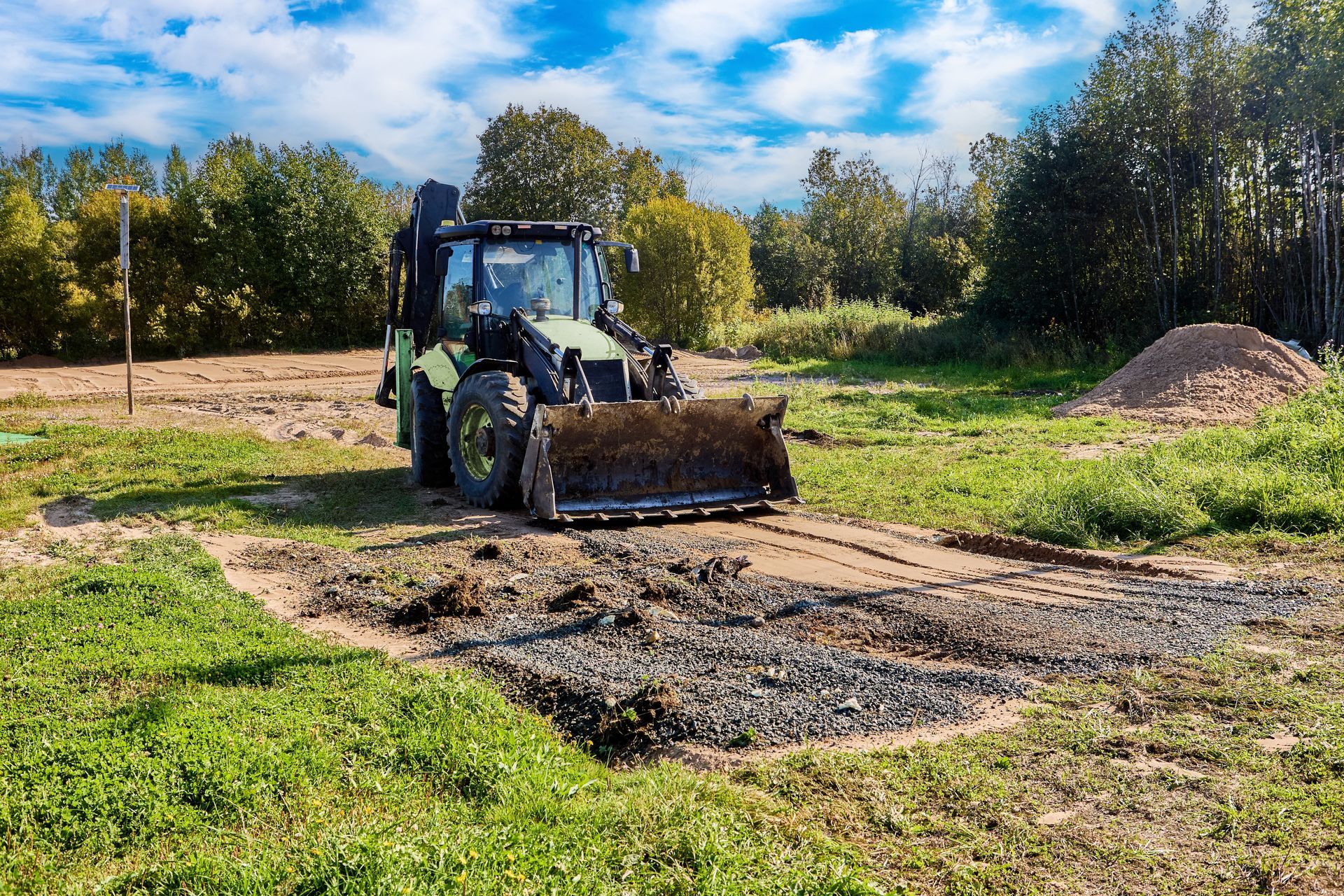
Shaping Ground to Control Water Flow
Land Grading in Howell for preventing water pooling and establishing stable surfaces
DGD Outdoor Services, LLC offers land grading for property owners in Howell and surrounding areas who need to correct drainage problems, prepare sites for construction, or create level surfaces for landscaping and hardscaping. You may have standing water along your foundation after storms, uneven terrain left over from previous work, or a sloped yard that makes mowing difficult and erosion inevitable. The service uses grading equipment to reshape the soil, establish proper slope, and create a stable base that directs water away from structures and low spots.
The crew evaluates existing elevations, drainage patterns, and soil conditions before moving dirt. A box blade, land plane, or grading bucket is used depending on the area size and precision required. Grading plans are tailored to your property layout, whether that means a gentle slope toward a swale, a crowned driveway pad, or a level bed for sod installation. Soil is compacted in layers to prevent settling.
If water has been pooling near your home or you are preparing ground for a patio, driveway, or outbuilding, reach out to discuss grading options and timing.
What Grading Fixes and How It Holds
You will see a visibly smoother, more uniform surface with intentional slope directing water toward drainage outlets or perimeter swales. Low spots where water used to collect are filled and compacted, and high points are cut down to match the surrounding grade. DGD Outdoor Services, LLC ensures that the final surface supports the next phase of your project, whether that is seeding, gravel placement, or concrete work.
After grading, rainwater flows predictably across your property instead of stalling in random depressions. You may notice drier conditions near your foundation, less mud in walking paths, and easier maintenance across the yard. The soil base is firm enough to support foot traffic, equipment, or vehicular loads depending on compaction level and material type.
Grading does not include topsoil placement, seeding, or finish landscaping unless specified. It also does not address subsurface drainage issues like broken tiles or compacted clay layers. If water problems persist after grading, additional drainage work may be needed.
Questions About Grading and Site Prep
Property owners typically ask about slope requirements, timing, and how grading fits with other site improvements.
What slope is needed to move water away from a foundation?
A minimum slope of two percent, or about one-quarter inch per foot, is standard for the first ten feet around a structure. Steeper slopes may be used in areas with heavy runoff or clay soils.
How is grading different from excavation?
Grading reshapes existing soil to establish slope and smooth surfaces, while excavation removes soil to create depth or access. The two services are often combined on the same project.
When should grading be done relative to other site work?
Grading typically follows excavation and utility installation but precedes final landscaping, paving, or concrete placement. It sets the foundation for everything that comes after.
What equipment is used for residential grading in Howell?
A skid steer with a grading bucket or box blade is common for smaller areas, while a dozer or motor grader is used for larger lots or more precise work. Compactors or rollers are used to firm the soil after shaping.
Why does graded soil sometimes settle or shift after completion?
Settlement occurs if soil is not compacted in lifts or if organic material is left in the base. Proper compaction and moisture control during grading reduce the risk of future movement.
For drainage correction, site preparation, or property improvements that start with a stable surface, contact DGD Outdoor Services, LLC to review your site and develop a grading plan that fits your goals.